
বায়ার ফার্মরাইজ অ্যাপ ইনস্টল করুন
বিশেষজ্ঞ কৃষি সমাধানের জন্য!
অ্যাপ ইনস্টল করুন
বায়ার ফার্মরাইজ অ্যাপ ইনস্টল করুন
বিশেষজ্ঞ কৃষি সমাধানের জন্য!
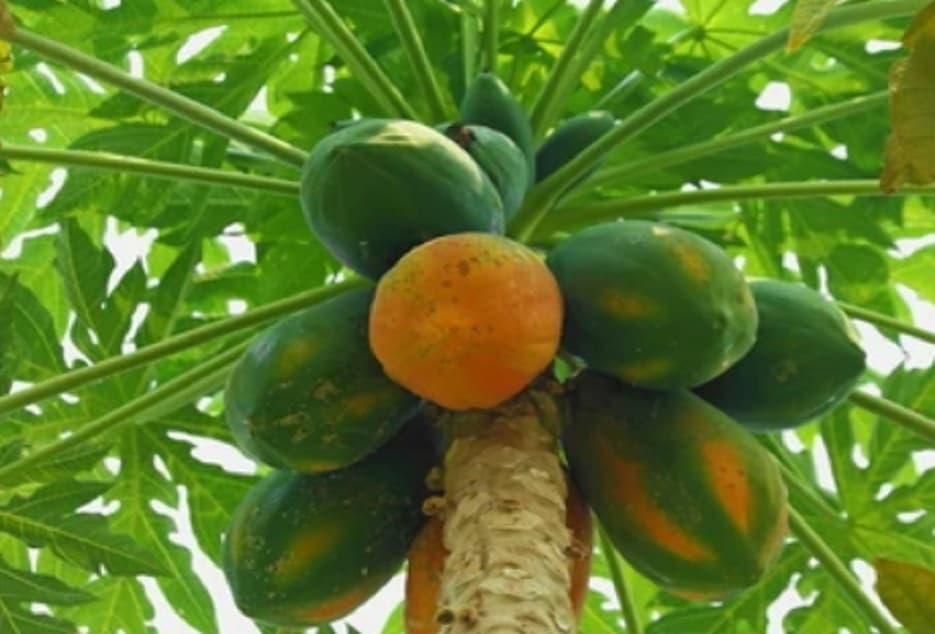
Papaya is a popular fruit famous for its high nutritive and medicinal values. It comes earlier in bearing than any other fruit crop, produces fruits in less than a year and the production of fruits is quite high per unit area.
It is a tropical fruit and grows well in regions where summer temperature ranges from 35°C - 38°C. Tolerates frost and comes up to an elevation of 1200 m above mean sea level. Well drained soils of uniform texture are highly preferable to avoid collar rot disease.
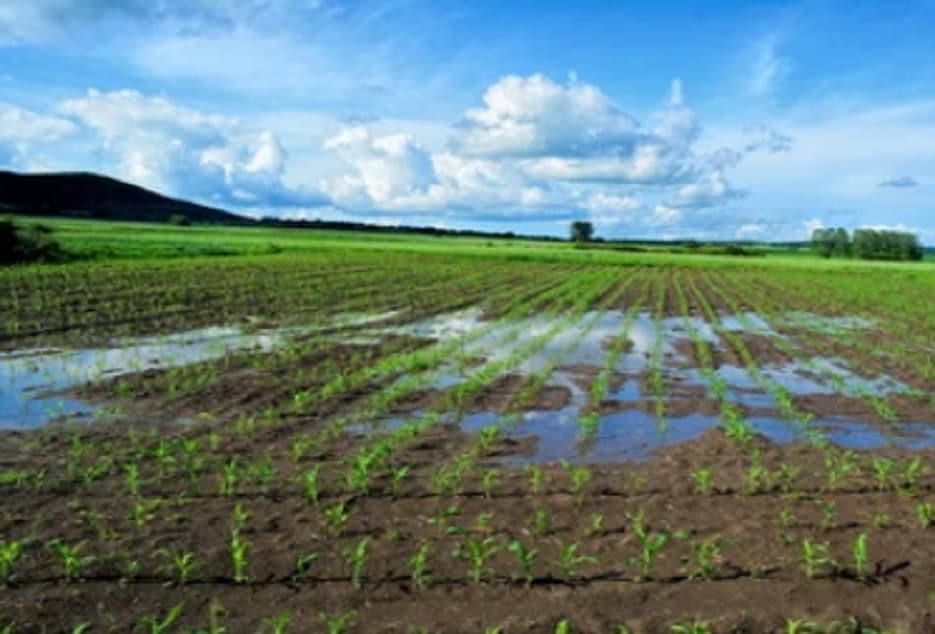

Planting and Season:- Papaya can be cultivated in below seasons In India. ➥ Spring season (February – March) ➥ Monsoon season (June-July) ➥ Autumn season (October-November)
The best varieties under cultivation are Taiwan 786, Pusa nanha, 15 number, Red chili, Green berry, Ice berry, Raspberry, Meriwala. Commercially the papaya is propagated by seeds. The tissue culture technique is limited to research laboratories only. The seeds lose viability in a short period and therefore the seeds should not be stored for more than a season.
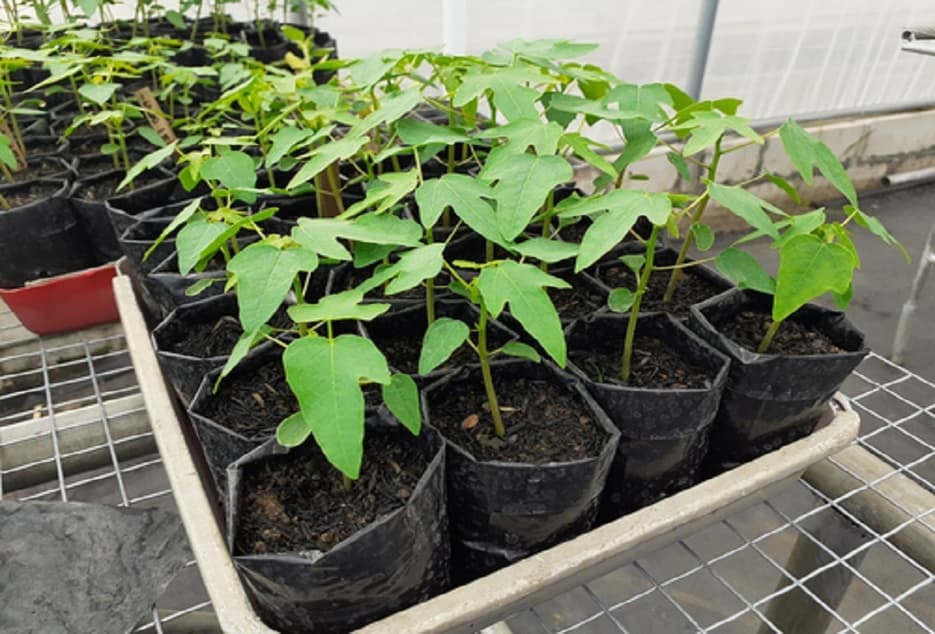
A spacing of 1.8 x 1.8 m. is normally followed. However higher density cultivation with spacing of 1.5 x 1.5 m./ha enhances the returns to the farmer and is recommended.
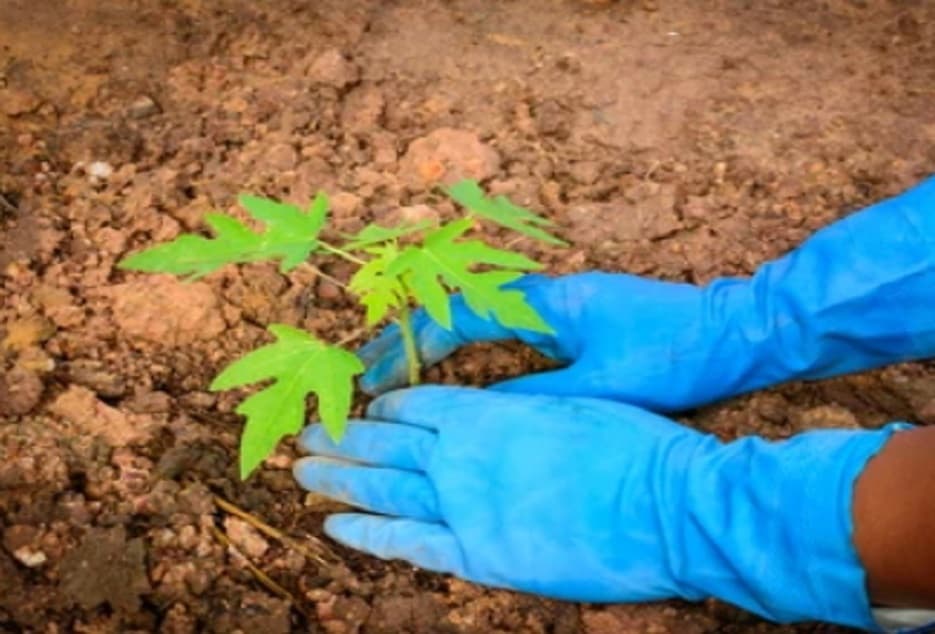
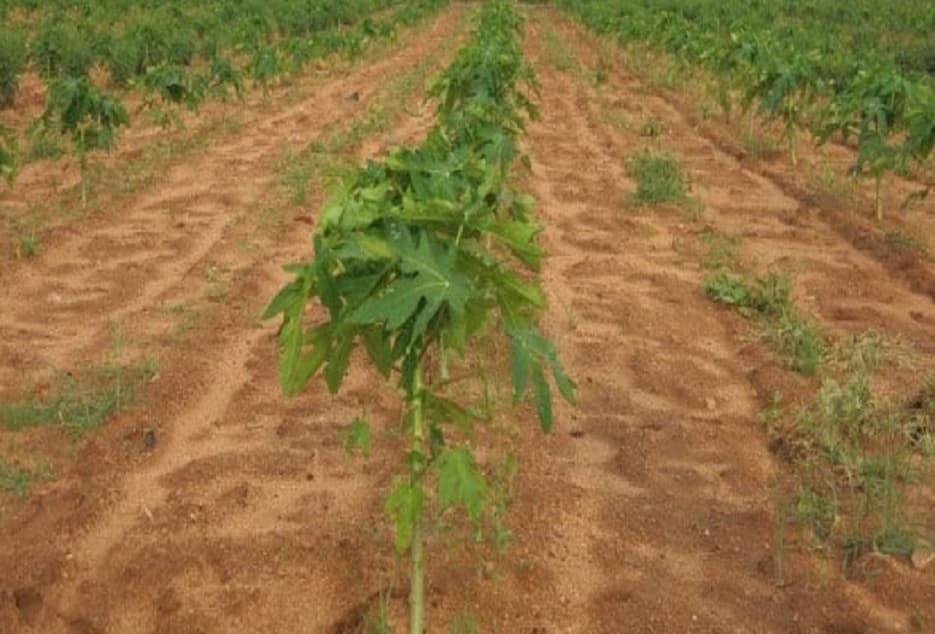
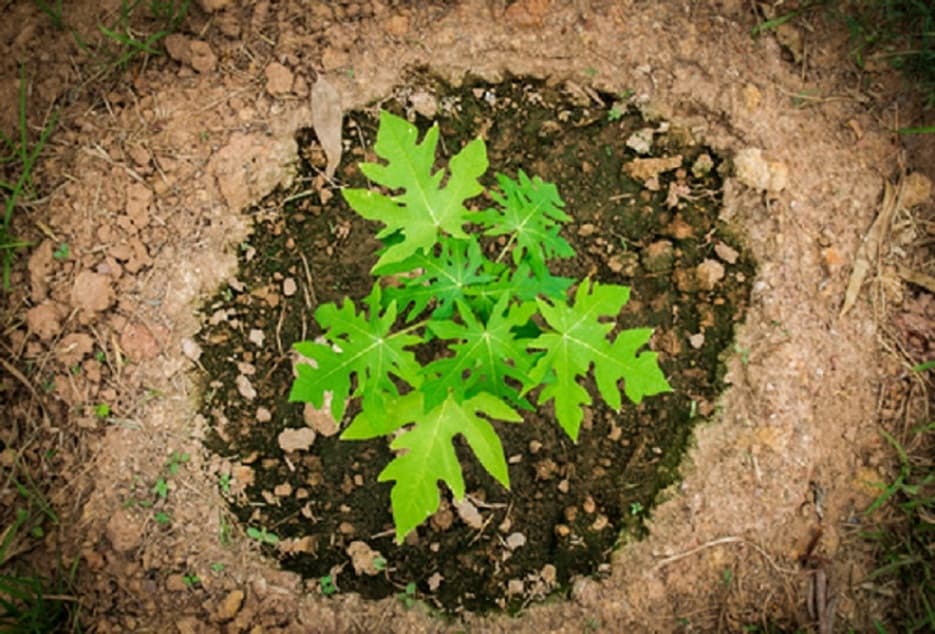
Initially planting can be done with 3 to 4 seedlings at one place and while removing extra plants and keep one plant per pit while doing so 10 percent male plants are kept in female plant population to have pollination and to improve the fruit.
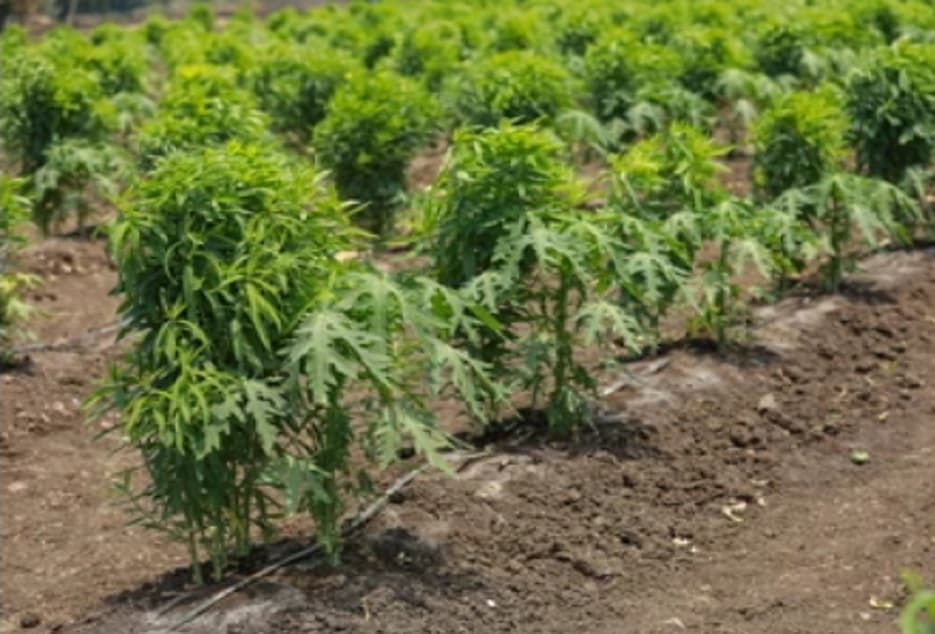
This operation is mainly done to remove the weeds during the early period of growth, weeding and hoeing in between rows also favour better aeration to root zone. Some times pre-emerging weed killer can also be used.
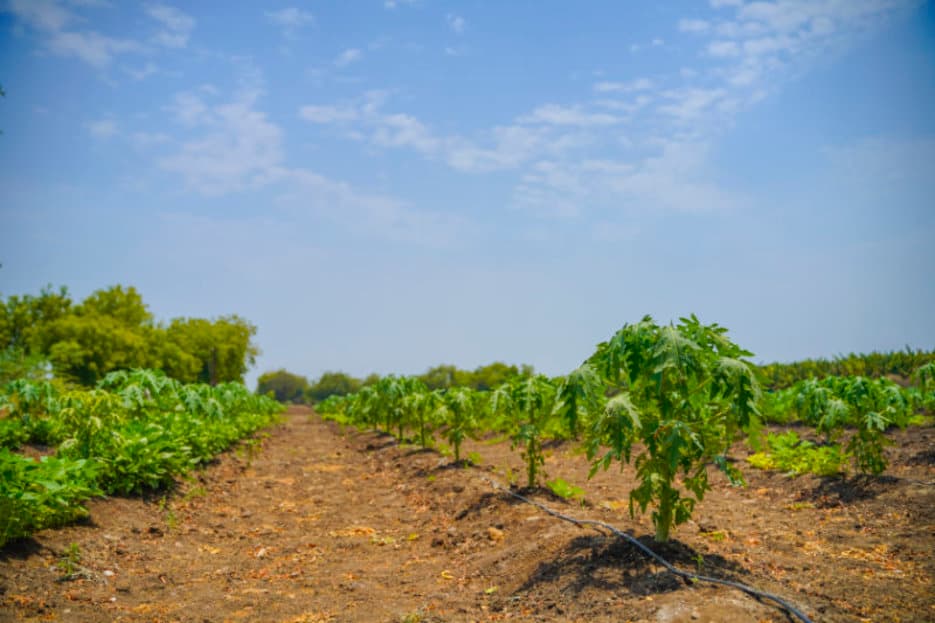
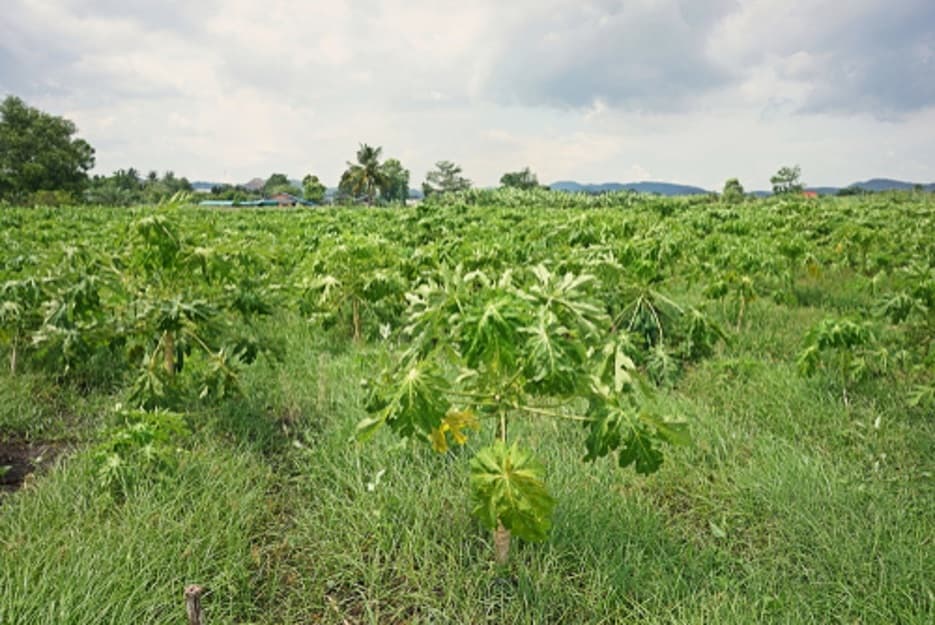
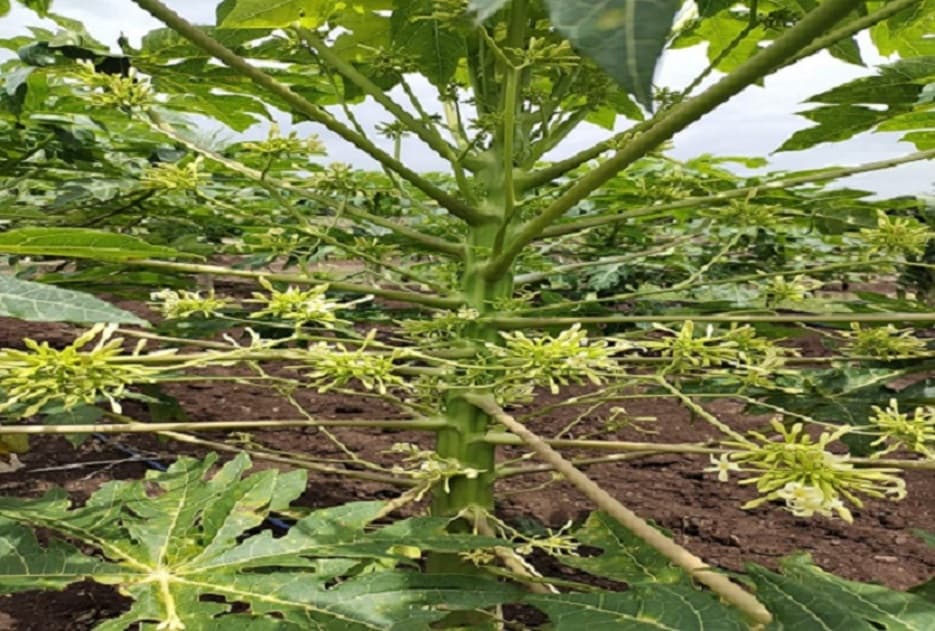
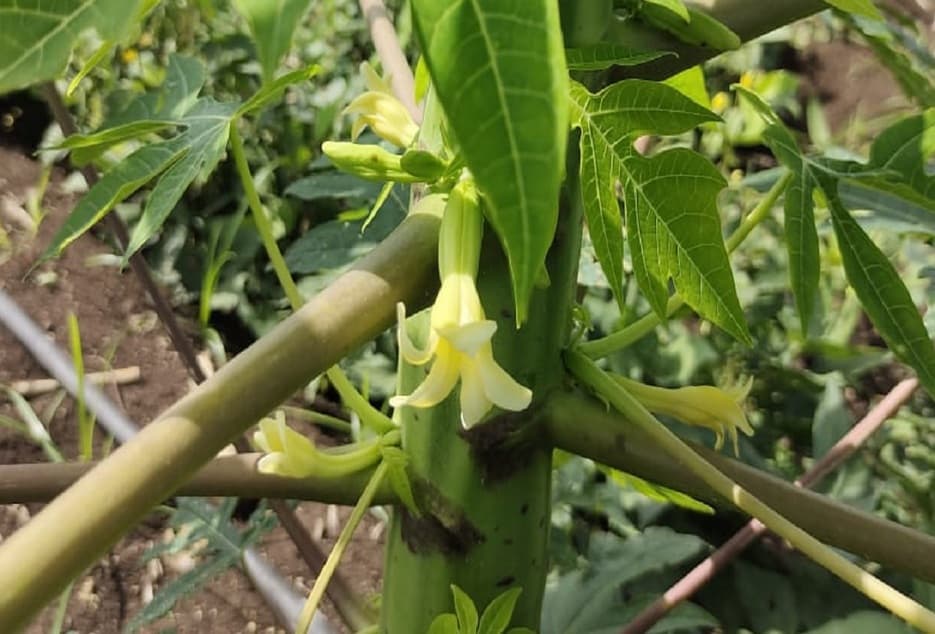
Papaya plants or trees may be categorized to male, female or hermaphrodite trees based on type of flowers they produce.The tree's type or gender, the flowers and fruit (if found) vary in appearance, function and size. Typically Papaya plants gender may change depending on the temperature during the developmental stages.
For better growth, production and quality, the optimum soil moisture is maintained by irrigating the crop judiciously. Irrigation interval well depend on season, crop growth and soil type. In no case, water should be allowed to stagnate causing root and stem rot. Drip system of irrigation is beneficial and the actual quantity of water to be given per plant per day should be worked out critically.
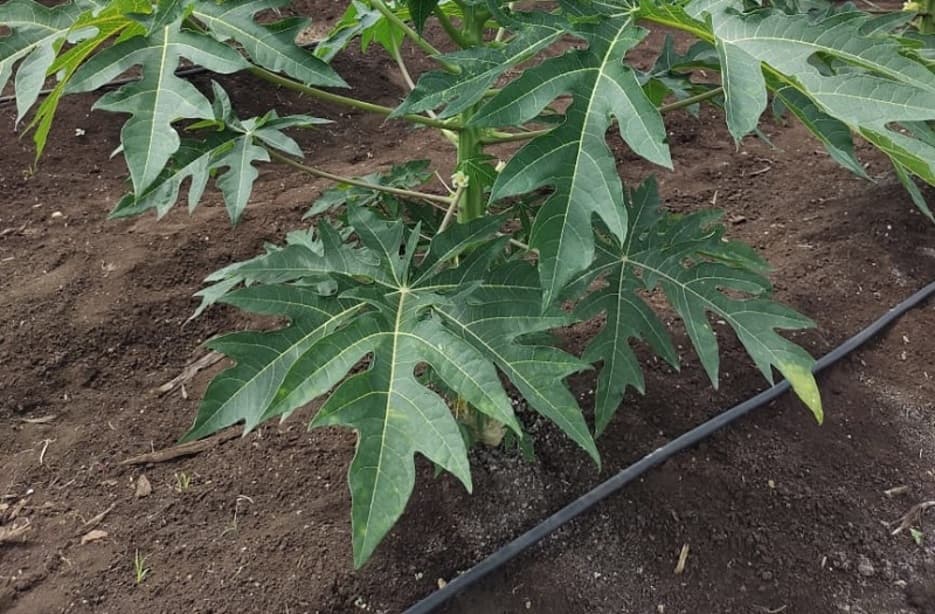
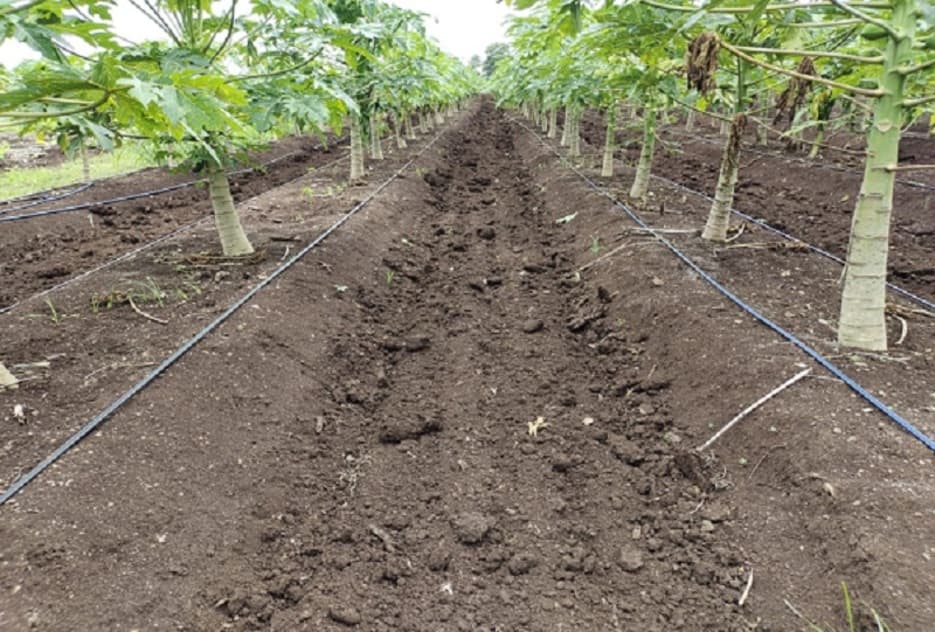
The dose of NPK at the rate of 200 kg each per acre, along with 8-10 tones of FYM 20 to 40 kg of micronutrients and seaweed extract granules.
Mite
Aphids causes curling and yellowing of leaf. Sooty mold growth on honey dew and transmit viral diseases like Papaya Ringspot Virus. Aphids can be managed by avoiding excessive nitrogen fertilizers. Use reflective mulches to repel aphids. Aphids can be also managed by using recommended chemicals.
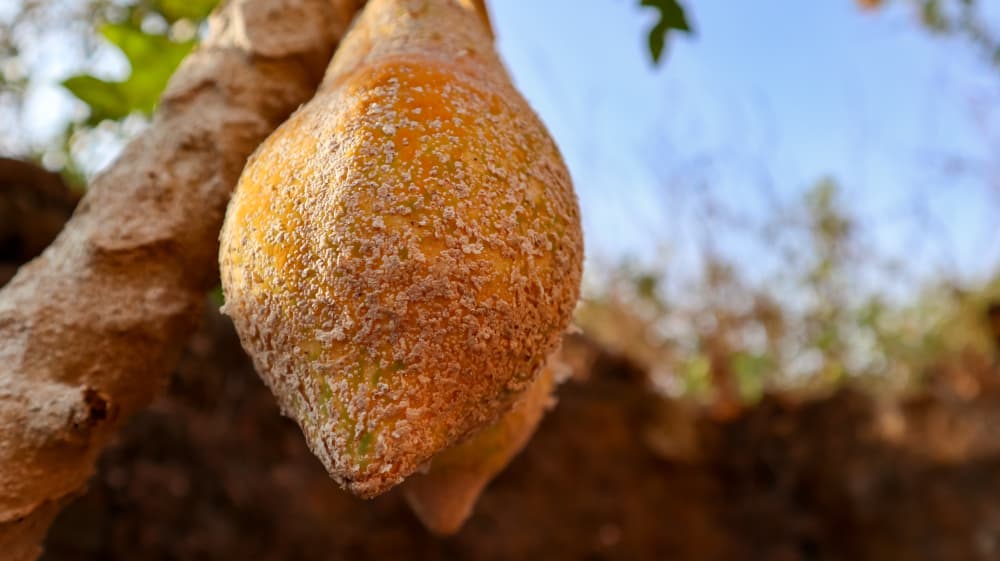
Mealybugs feed by inserting long sucking mouthparts styles into plants and drawing sap out of the tissue. Higher rate of infestations causes more damage and plant growth is reduced and fruit quality will poor. Mealy bug may cause severe yield loss and it can control by using recommended Insecticides.
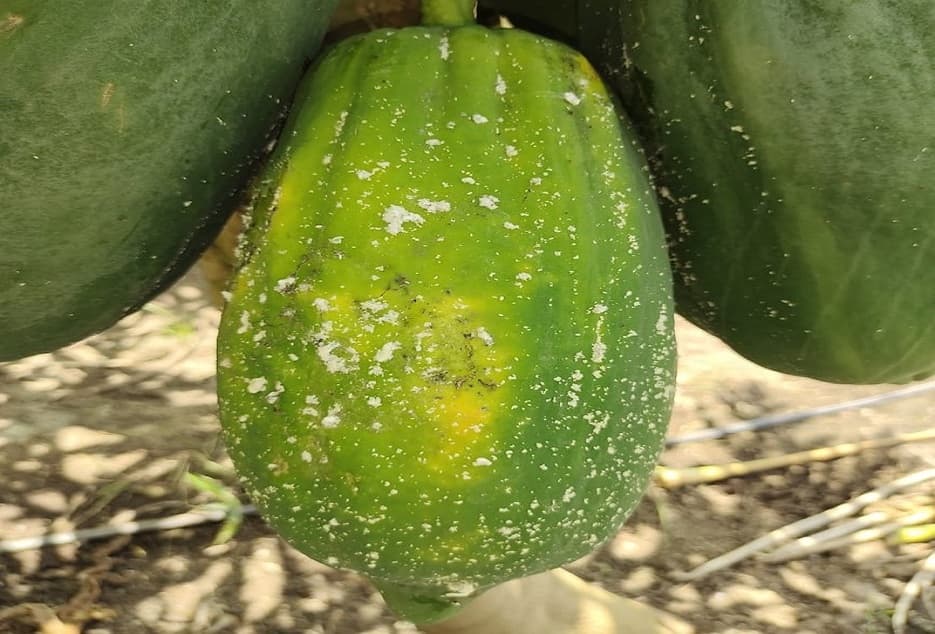
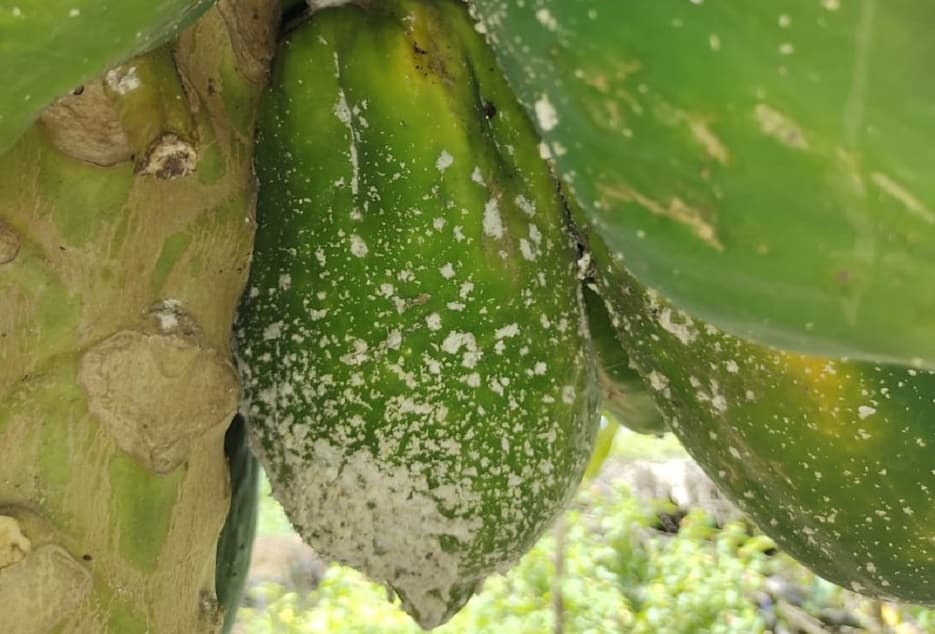
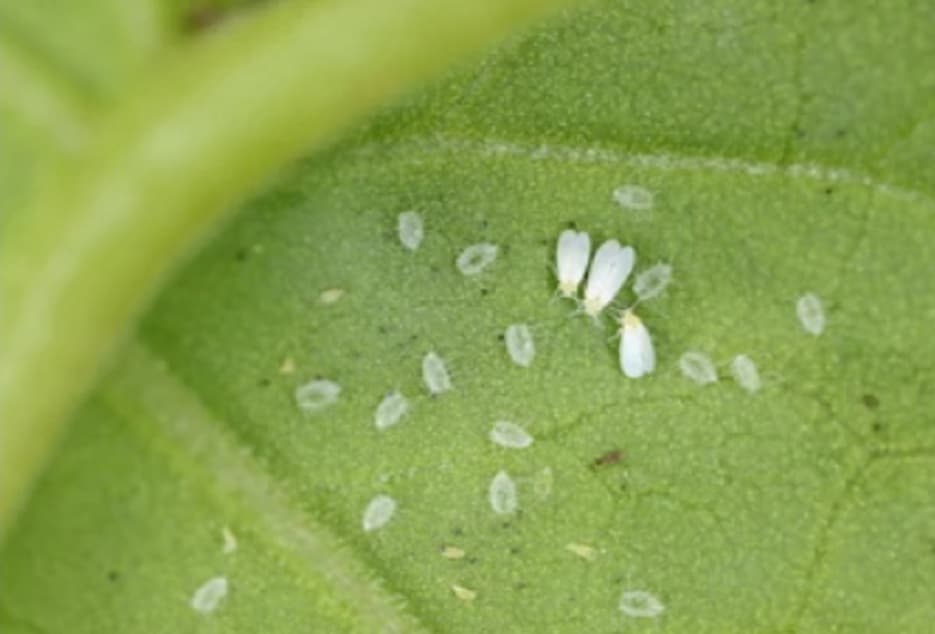
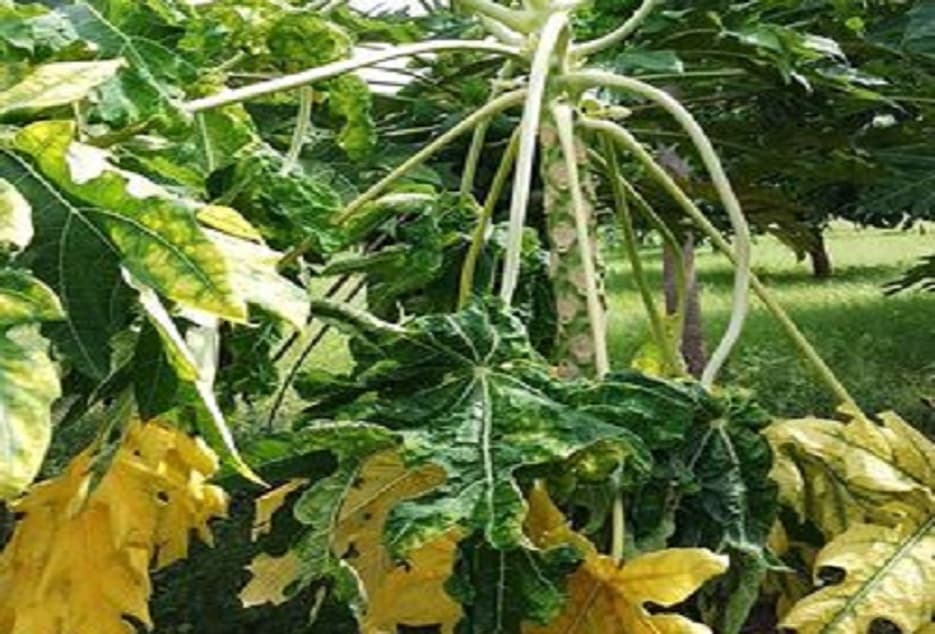
Whiteflies are a common pest of papaya and are destructive/active during the dry season. They suck the cell sap and are seen clustering between the veins on the ventral surface of the leaves. The leaves become yellowish, wrinkle, and curl downwards. They also act as vectors in transmitting the virus and can be manage by using recommended insecticides.
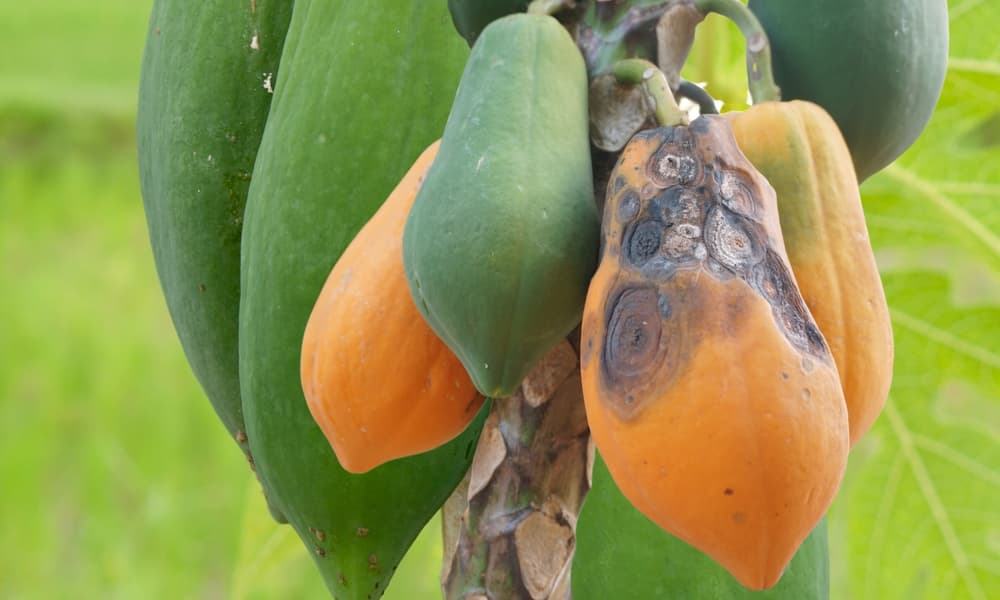
Anthracnose in papaya appears as small and water-soaked spots on ripening fruits. Later spot becomes sunken and dark on fruit. Fruit rot and premature fruit drop in severe cases. Use healthy seedlings, avoid overhead watering, rotate crops, and ensure proper spacing for airflow for management of Anthracnose. Fungicide treatment reduces anthracnose risk.
Powdery mildew appears as white, powdery spots on leaves and stems, which can be managed by improving air circulation, avoiding overhead irrigation, and by applying fungicides to manage powdery mildew.
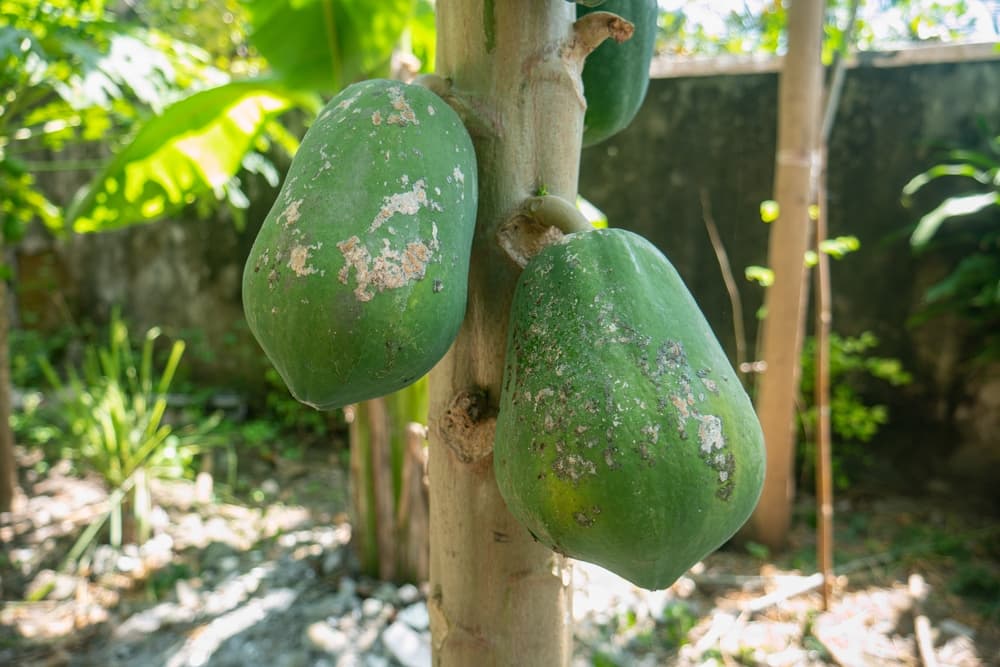
Top leaves show yellow mosaic and green oily streaks on stems and petioles. Ring spots appear on flowers and fruits. The disease, spread by aphids, can cause 5–100% yield loss depending on plant age at infection. So control Aphid vector by recommended insecticides.
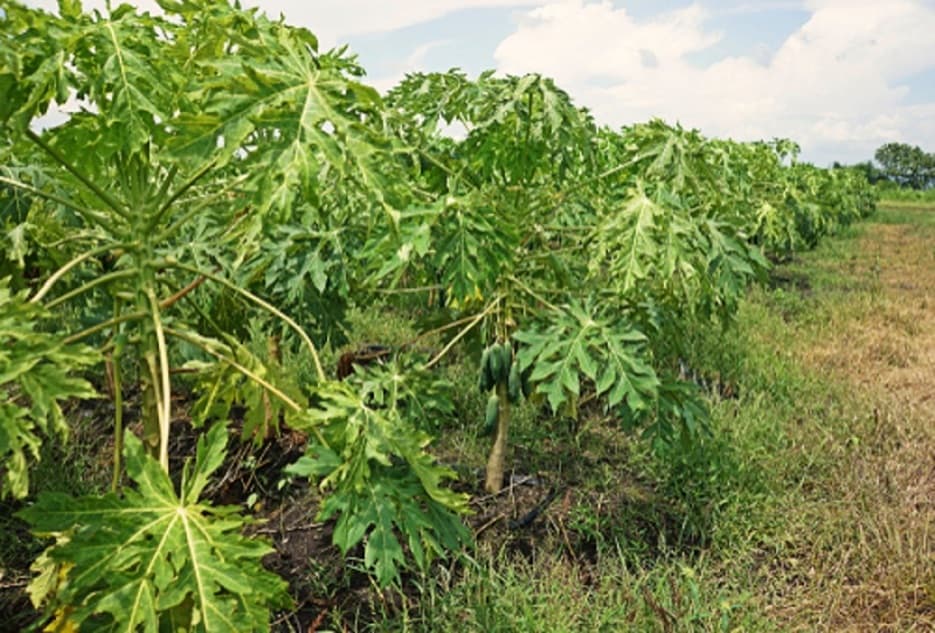
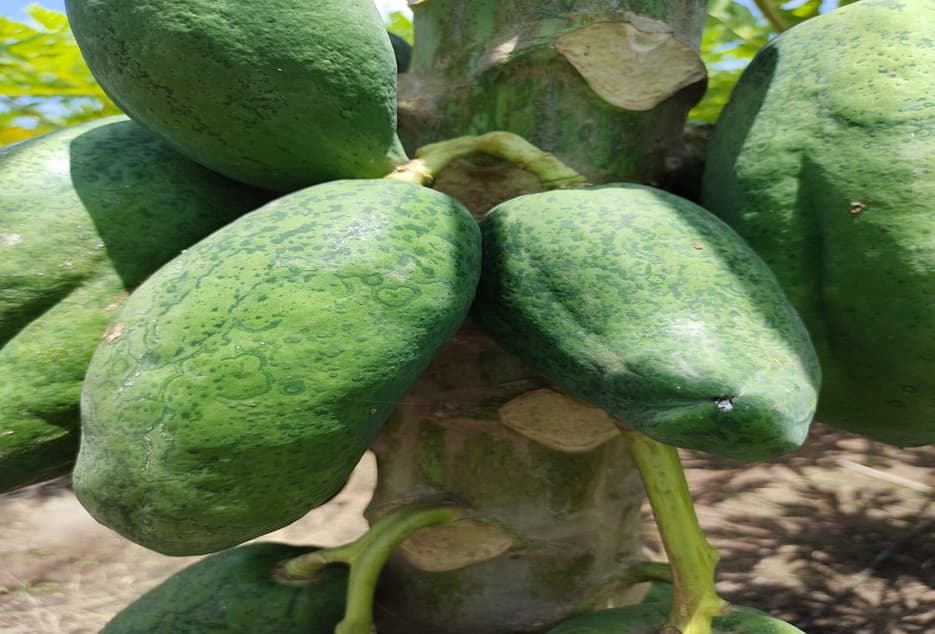
Papaya mosaic virus causes yellow-green mosaic patterns and blister-like dark green patches on young top leaves, shortened petioles, upright leaf posture, and stunted growth, with aphids acting as the primary vector. Control the aphid vector using insecticides recommended by agricultural experts.
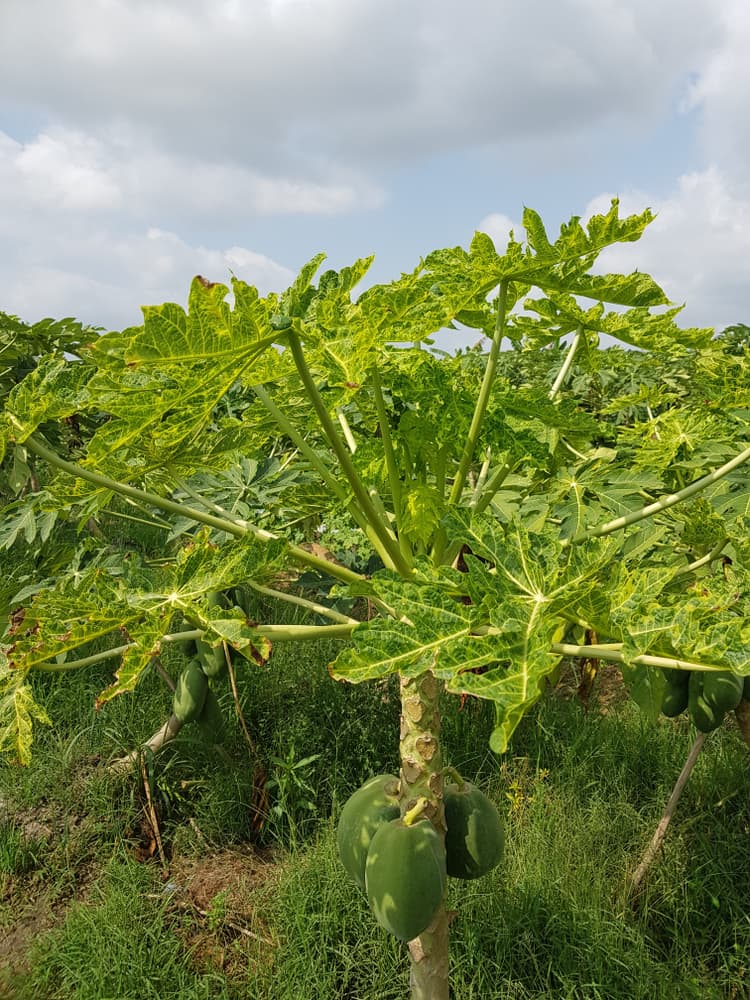
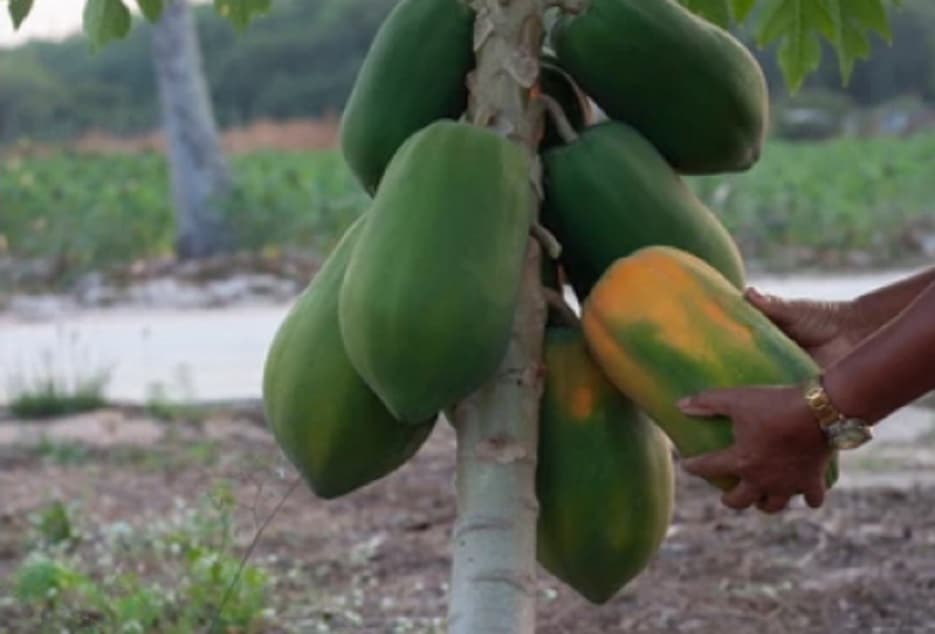
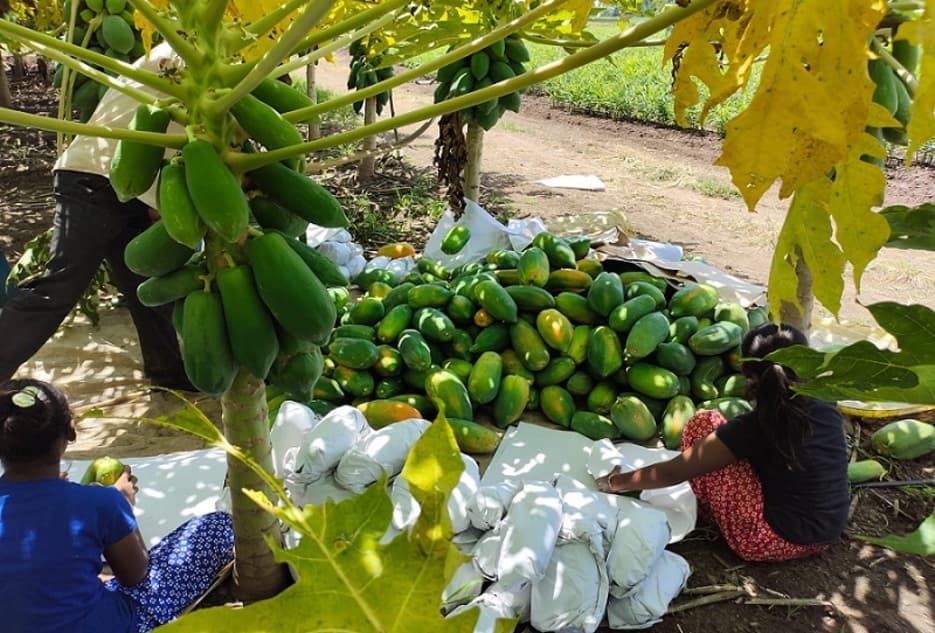
Harvesting generally starts 9 to 10 months after sowing. Mature fruits are harvested when they show streaks of yellow coloration. Since papaya trees are not very tall, handpicking is employed. Yield in papaya varies from about 25 kg/plant in some varieties like 75 - 100 kg/plant.
Thank you for reading this article, we hope you clicked on the ♡ icon to like the article and also do share it with your friends and family now!


